How to change the locks after moving home
Moving into a home means inheriting a set of keys without knowing how many copies may still exist. Changing the external locks can therefore be a reassuring early job, and with some doors the part that controls the key is much easier to replace than the complete lock first appears.
Before buying a replacement, work out what is fitted to each external door and whether the whole lock needs changing or only the cylinder that operates it. Once the purchase has completed and you have possession of the property, photograph each door from the inside, outside and along its open edge. Those views will usually tell you whether you are looking at a euro cylinder, a surface-mounted rim night latch or a lock recessed into the door.
You can remove the existing cylinder or lock to identify and measure it, then put it back while you find a suitable replacement. Once you start loosening or removing any part of the lock, however, the door may not close or lock properly until everything has been refitted and adjusted. Allow enough time for the job, and do not shut the door until you have tested the key, latch or bolt, handle and any multipoint mechanism from both sides. Keep the old lock and keys nearby until you know the replacement is working properly.
First, work out which part needs changing
A euro cylinder is the removable key barrel found in many uPVC, composite and modern timber doors. Lifting the handle may move several hooks and bolts, but the cylinder can normally be replaced without disturbing that multipoint mechanism.
A lock commonly described as a “Yale lock” is usually a rim night latch. Its main case sits on the inside face of the door, with the round key cylinder on the outside and a flat tailbar passing through the door between them. The spring latch closes into a separate surface-mounted keep on the door frame. If those parts are working properly, you may only need a replacement rim cylinder rather than a complete night latch.
A mortice lock is recessed into the edge of a timber door. A mortice deadlock operates only a bolt, while a mortice sashlock combines a key-operated bolt with a latch and door handles. Replacing one can still be straightforward when a new case matches the existing recess and holes, but an imperfect match can turn it into a carpentry job.
Changing a euro cylinder
The mechanism looks more complicated than the job usually is. One long screw in the open edge of the door holds the cylinder in place, although the cylinder will only slide out when its central cam has been turned into line with the body.
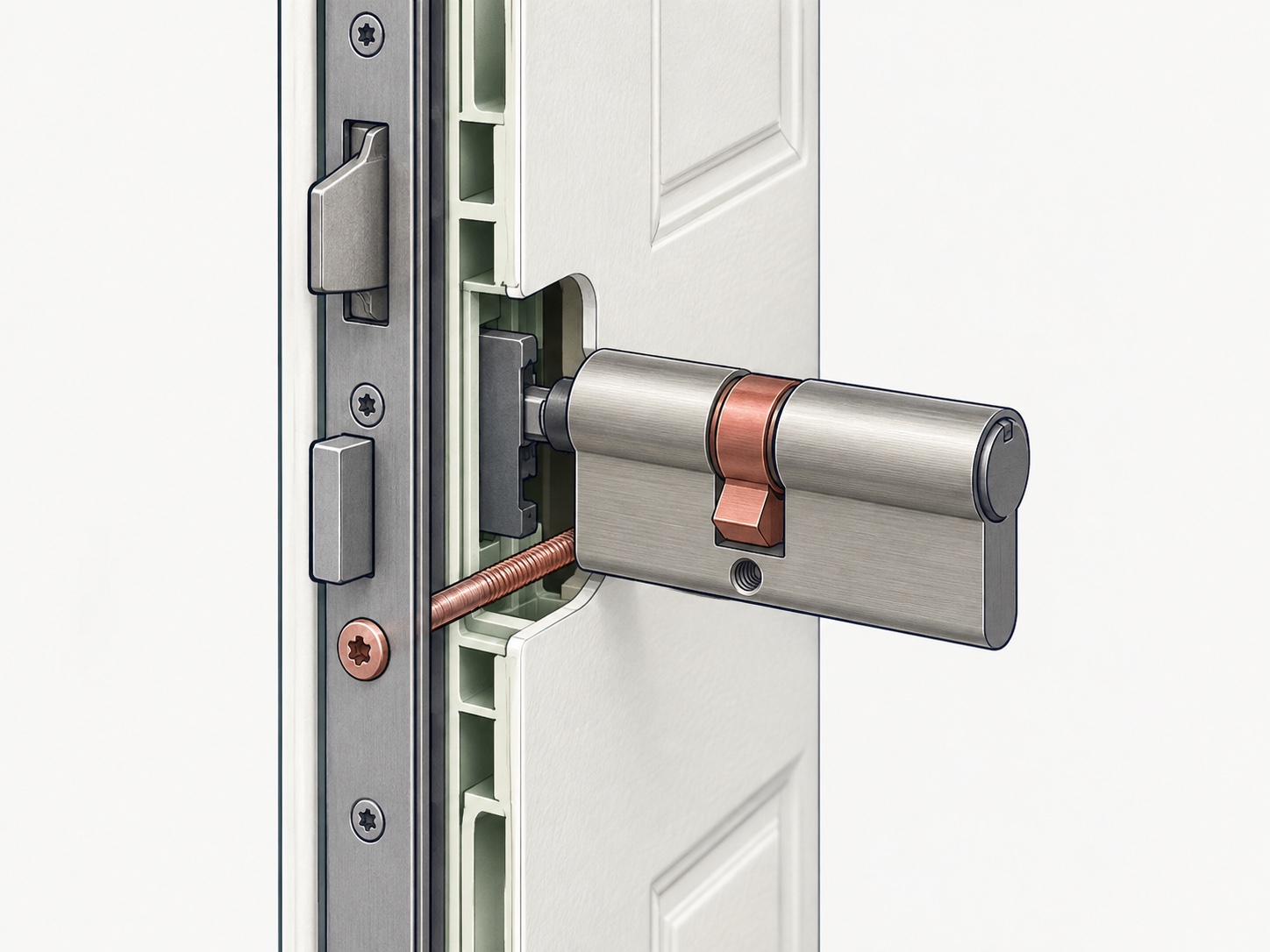
Measure from the centre of the fixing screw to each end of the cylinder. The two measurements are recorded separately, often as a pair such as 35/45 mm, because the two sides do not have to be equal. Mark which measurement faces outside and include the thickness of the handle or security furniture. Also match whether the cylinder takes a key on both sides, has an internal thumbturn or is operated from one side only.
- With the door open, remove the long retaining screw from the door edge. It is normally in line with the bottom of the cylinder rather than with the handle screws above and below it.
- Put the key into the cylinder and turn it slightly while applying gentle outward pressure. When the cam lines up with the body, the cylinder should slide towards you without force.
- Compare the old and new cylinders, including the two lengths and the position of the cam, then slide the replacement into the door with the key turned slightly.
- Refit the retaining screw and test the key, handle and all locking points from both sides before closing the door.
The outside end should sit close to the surrounding handle or escutcheon rather than standing proud where it is easier to grip and attack. The Master Locksmiths Association advises that a cylinder should not project more than 3 mm beyond the external furniture. Where the door and lock are compatible, look for a cylinder rated to TS007 three-star or SS312 Diamond, and check whether your insurer requires a particular lock standard.
If the key turns but lifting the handle does not move the hooks, rollers or bolts properly, changing the cylinder is unlikely to solve the problem. The fault may be in the multipoint strip or gearbox, so ask a locksmith or door specialist to check the mechanism before buying another cylinder.
Changing a “Yale”-style rim cylinder
Yale is a brand name, although it is often used for any night latch that locks behind you when the door closes. The round rim cylinder sits on the outside face of the door, the night-latch case is surface-mounted on the inside, and the latch closes into a separate surface-mounted keep on the frame. Provided the case and latch are working well, the cylinder is the part to replace.
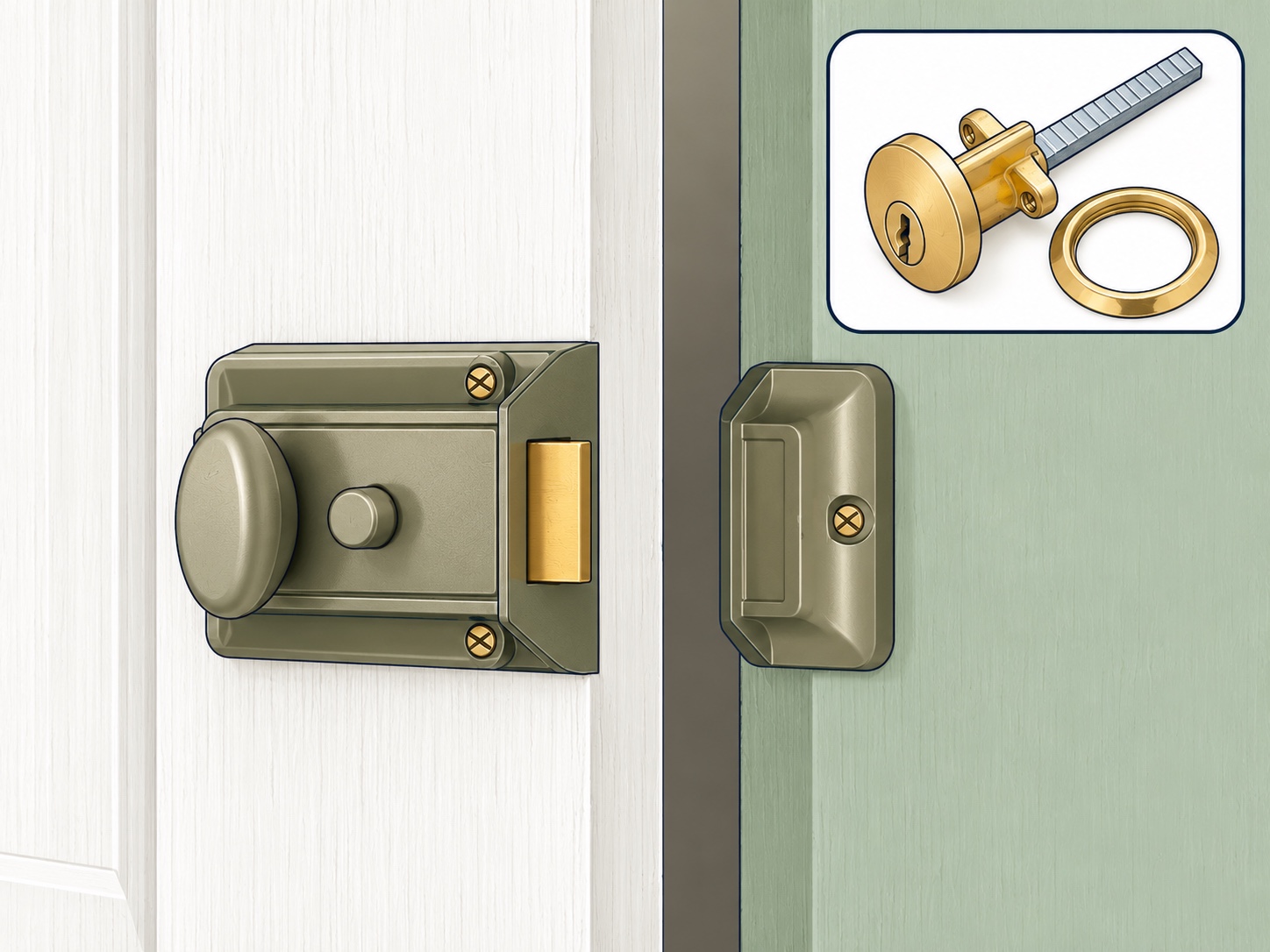
- Leave the door open, hold the latch securely and remove the screws fixing its inside case to the mounting plate or door. Older slotted screws can be very tight, so use a screwdriver that fills the slot and stop before a damaged head makes the job harder.
- Once the case is out of the way, support the outside cylinder while removing the two screws which hold it through the mounting plate. The cylinder and its flat tailpiece can then be withdrawn from outside.
- Match the cylinder diameter, the door thickness it will accommodate, the screw positions and the tailpiece. Some replacement tailpieces are cut to length, but only after comparison with the original and in accordance with the maker’s instructions.
- Refit the cylinder and latch case, then test the outside key, inside turn or handle, latch and any snib while the door remains open.
If the latch case is working properly, replacing the existing cylinder with a compatible model should let you change the keys without replacing the complete assembly. If the existing latch is loose, damaged, does not engage properly or forms part of a lock standard required by your insurer, match the complete assembly or ask a locksmith to assess it rather than treating the barrel as the only consideration.
Replacing a mortice lock
A mortice lock is normally the most demanding of these three jobs because the complete lock case sits inside a pocket cut into the door. If a replacement has the same case, faceplate, keyhole and handle positions, it can be held by little more than the two faceplate screws. If those details differ, the existing timber, handles and keyholes may all need alteration.
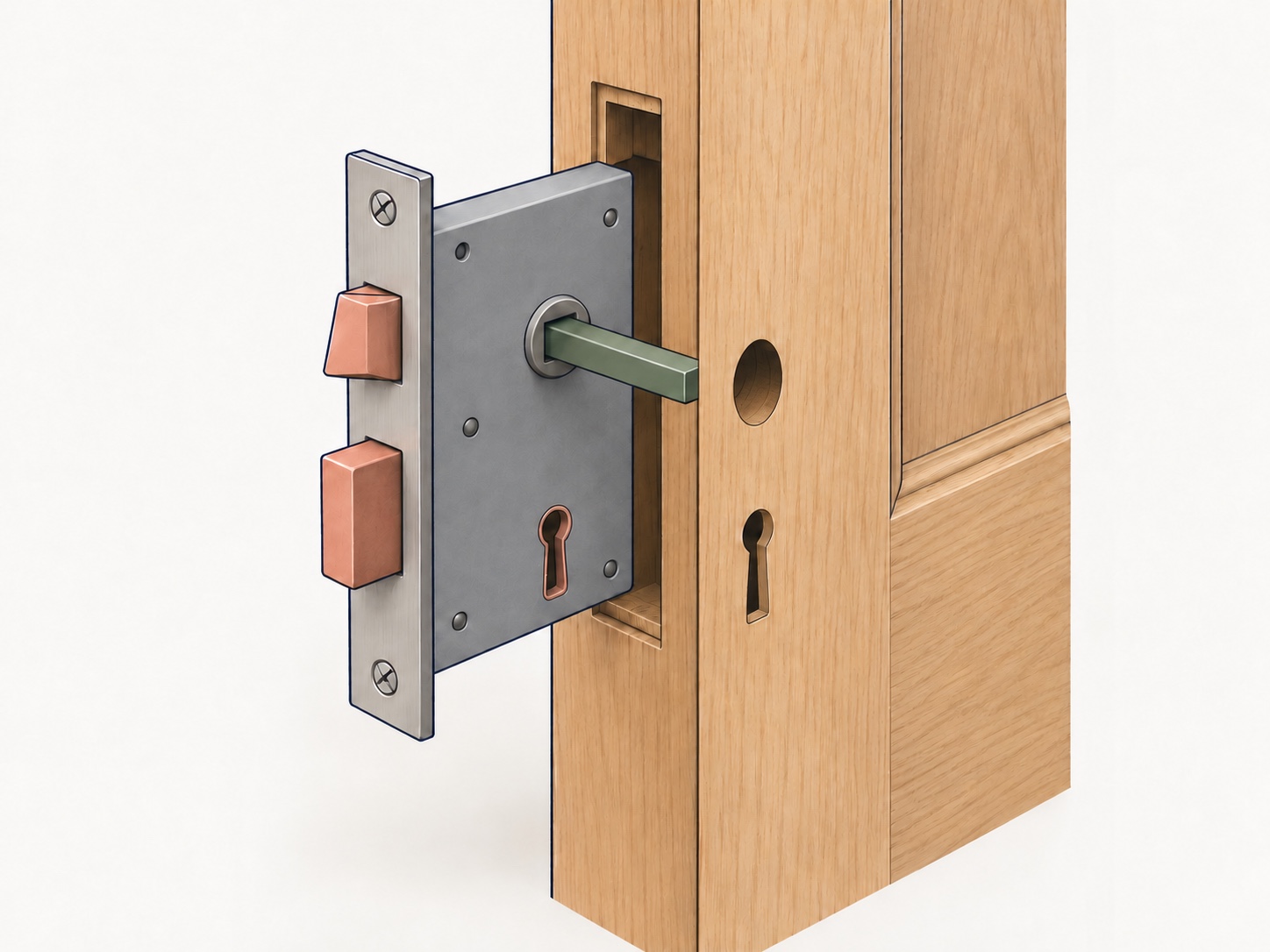
Before buying a replacement, measure the case depth and height, the faceplate length and width, and the backset from the faceplate to the centre of the keyhole. For a sashlock, also measure the centres between the keyhole and the handle spindle. Check the direction of the latch bevel and whether the door has a rebated meeting edge. Case depths of 64 mm and 76 mm are widely sold, but the description alone does not confirm that the other measurements will line up.
- With the door open, remove the handles, spindle and keyhole furniture where they prevent the lock case from coming out. Keep each screw with the part it belongs to.
- Remove the faceplate screws from the door edge and ease the case straight out. If it catches, check for a remaining handle fixing or spindle rather than levering against the door.
- Compare the old case directly with the replacement, paying particular attention to the faceplate, backset, spindle and keyhole positions before altering any timber.
- Fit the replacement, restore the handles and furniture, and test the latch and bolt with the door open. The bolt should enter the keep without the door having to be lifted or forced.
For an external timber door, “five lever” is useful information but is not the same as a certified security standard. If your policy calls for it, look for the British Standard Kitemark and BS 3621 marking on a suitable lock, then confirm the exact requirement with the insurer.
When a locksmith is the more sensible option
The do-it-yourself part of this job depends on an undamaged door and a replacement which genuinely matches. A locksmith is likely to be the safer and quicker route if you have no working key, the existing fittings are seized or damaged, a multipoint door is not locking smoothly, or a mortice replacement would require drilling or chiselling.
Take particular care with the entrance door to a flat. It may be a fire-resisting door and form part of the building’s shared fire precautions, while a lease can restrict alterations. Check with the freeholder or managing agent before changing hardware, and use a competent installer where the work could affect the door’s fire performance, self-closing action or escape from the property.
What to check before changing the locks
- Photograph the inside, outside and open edge of each door so you can identify the lock and keep a record of how it was fitted.
- Measure the existing part before buying a replacement, including both sides of a euro cylinder and all relevant mortice dimensions.
- Check your home-insurance requirements before replacing a certified lock or changing its security specification.
- Do not assume the key barrel is causing a mechanical fault if the latch, handle, gearbox or locking points are not moving freely.
- Keep the door open throughout fitting and testing, and try every key and control from both sides before allowing it to close.
- Ask before altering a flat entrance door, particularly where it is fire-resisting or the lease places responsibility with the freeholder.